What are Investment Funds? Types, examples, and how they work
Investment funds are widely used as a way to gain diversified exposure to financial markets. They come with added diversification, but there are some caveats and many different choices of funds worth considering.
Let’s delve into the mechanics of funds and what they offer.
Let’s delve into the mechanics of funds and what they offer.
QUOTE
A lot of people like ETFs because they give you a tremendous amount of diversity at a low cost. In fact, many ETFs have lower fees than even comparable traditional index funds, and sometimes lower minimum investment requirements.
Big ideas
- A fund is a group of financial assets with a specific focus. Funds are selected based on risk, fees, past performance, goals, and other factors. They offer potential benefits of diversification, liquidity, and lower transaction fees compared to trading individual stocks. But also each fund carries its own risks and fee structures.
- Funds come in all shapes and sizes – exchange traded funds, mutual funds, money market funds, hedge funds, etc. However, when the word fund is used, it usually refers to the mutual fund, the oldest type of modern fund.
- In recent years, ETFs have become more prominent than mutual funds. They tend to have lower fees and more flexibility in comparison.
What are funds, and how do they work?
DEFINITION
An investment fund is a group of financial assets, also called securities, pooled together with a specific theme.
In short, the benefits include expert management, diversification, and lower costs than self-investment.
It also saves the individual investor the laborious task of researching stocks and actively managing a portfolio. The fund takes care of compliance, reporting, and accounting on its side (not in terms of individual returns).
It also saves the individual investor the laborious task of researching stocks and actively managing a portfolio. The fund takes care of compliance, reporting, and accounting on its side (not in terms of individual returns).
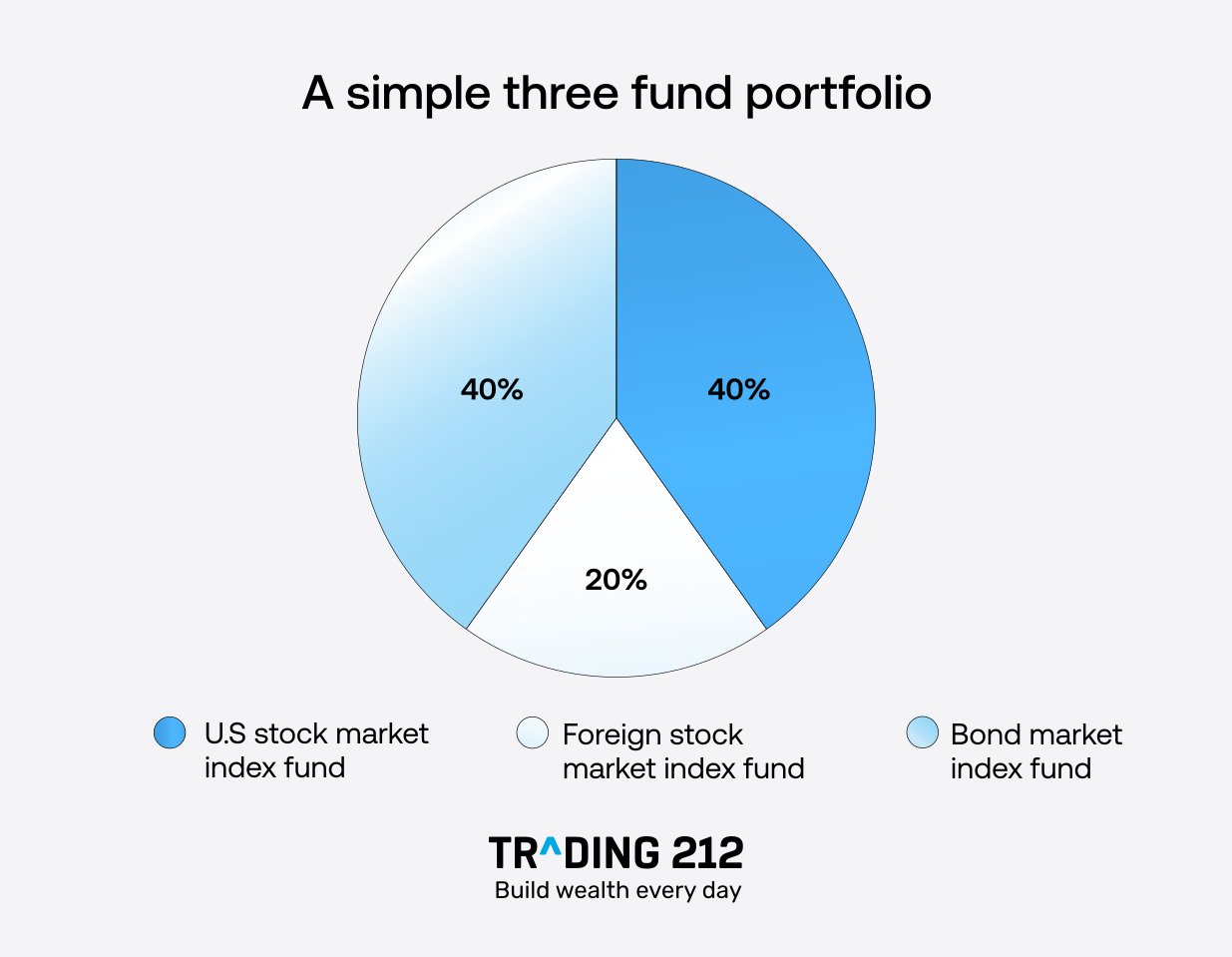
You can take a very light touch approach of investing in broad funds that aim to create a diversified portfolio of themselves. The example above is a so-called lazy portfolio that consists of just 3 funds. Alternatively, you can select a number of funds that give you wide diversification with a little extra discretion.
You can read up on a fund through its prospectus, a legal document that will contain key information pertaining to its:
You can read up on a fund through its prospectus, a legal document that will contain key information pertaining to its:
- Objectives
- Fees
- Assets
- Performance
- Management team
- Financial statements, and more
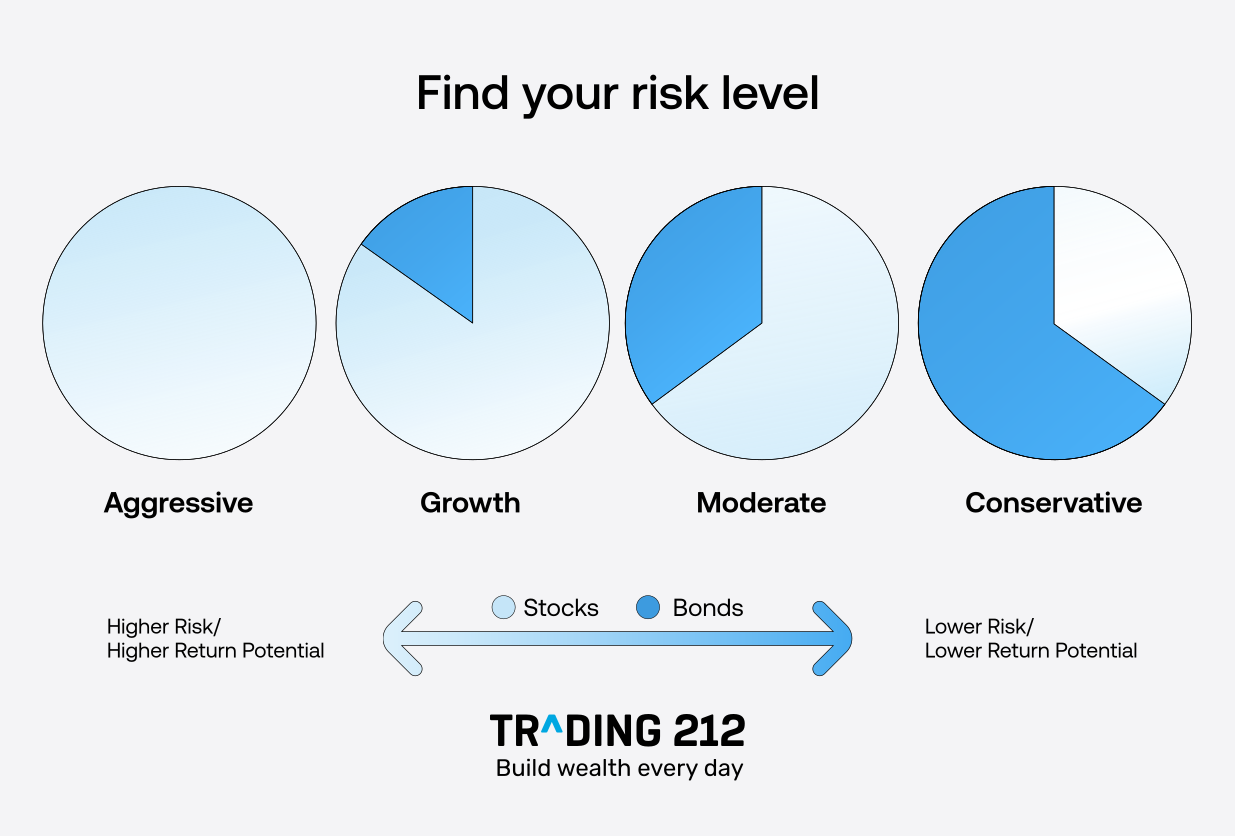
On a broad level, funds can be described as conservative, moderate, or aggressive.
Why use funds vs stocks?
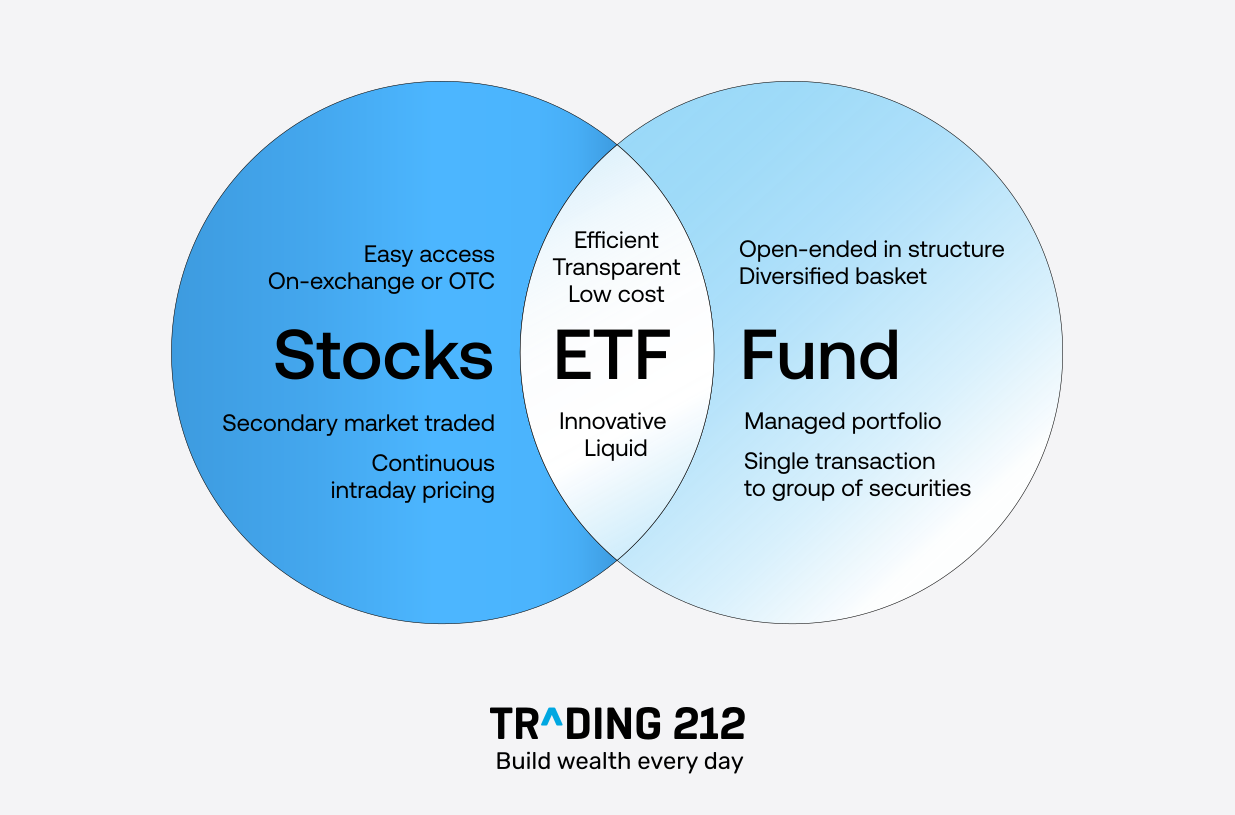
As an investor, you might consider using both individual securities and funds, depending on your goals and preferences. These approaches are not mutually exclusive.
The different types of investment funds
The following table outlines the various types of funds, what they invest in, the associated risk level, and what they are most useful for. If you have decided to invest in a fund, it is important that you understand your financial goals and level of risk tolerance, as this can help you assess whether a particular option aligns with your needs.
It is a common mistake to shop for things without knowing exactly what you are looking for, and end up with something you do not really need. Here is a table of the main types of investment funds:
It is a common mistake to shop for things without knowing exactly what you are looking for, and end up with something you do not really need. Here is a table of the main types of investment funds:
Type of fund | What it invests in | Risk level | Main goal | Used for |
Equity funds | Company stocks | Medium to high | Steady growth | Long-term growth option |
Fixed income funds | Bonds and similar debt investments | Low to medium | Steady income | Safer income option |
Money market funds | Short-term, low-risk debt like Treasury bills | Very low | Keep funds stable and easy to access | Low-risk saving |
Asset allocation funds | Mix of stocks, bonds, and cash | Varies | Balance of risk and return | Beginners or balanced investors |
Index funds | Follows a stock market index like the S&P 500 | Medium | Match market performance | Low-cost, long-term investing |
Commodity funds | Gold, oil, or other raw materials | High | Growth and diversification | Hedging or diversifying |
Target date funds | A mix of assets that become more conservative as a set date nears | Decreasing over time | Gradual rebalancing by a certain year | Retirement planning |
International funds | Stocks or bonds from outside your country | Medium to high | Growth through global investing | Global diversification |
Sector and theme funds | Specific industries (like tech, health, etc.) | High | Gain from growing sectors | Focused growth strategies |
Socially-responsible funds | Companies with good ethics and sustainability practices | Medium to high | Grow money while considering ethical, social or environmental factors | Ethical or green investors |
What are mutual funds?
DEFINITION
A mutual fund pools money from different investors and uses it to buy a portfolio of assets. These assets can include shares, bonds, or other instruments.
Investors buy units in the fund, and the value of each unit moves depending on the value of the fund’s holdings.
Investors buy units in the fund, and the value of each unit moves depending on the value of the fund’s holdings.
In the UK, these funds are usually called unit trusts or open-ended investment companies (OEICs). Like their US counterparts, investors do not directly own the shares or bonds inside the fund – they own units in the fund itself. It is typically actively managed by a fund manager who executes decisions based on the aims of the fund.
Mutual funds became very popular around the 1980s but in the past decade, index funds as well as low-cost ETFs tracking an index have become much more popular among retail investors.
Mutual funds became very popular around the 1980s but in the past decade, index funds as well as low-cost ETFs tracking an index have become much more popular among retail investors.
How mutual funds are priced
Mutual funds trade similarly to stocks, but there are differences. Mutual funds trade only once a day. Moreover, they are priced in terms of their Net Asset Value (NAV). This is a basic calculation where liabilities are subtracted from assets and divided by the total number of units.
EXAMPLE
Let’s take the example of a fund with £10,000,000 in assets (stocks, bonds, cash, etc.), £500,000 in liabilities (management fees, operational costs, etc.), and total units outstanding of 950,000.
NAV Calculation
1. Calculate Net Assets:
Net Assets = £10,000,000 − £500,000 = £9,500,000
2. Determine NAV per Unit:
NAV = £9,500,000 ÷ 950,000 = £10.00
If an investor wants to invest £5,000, they would get: £5,000 ÷ £10.00 = 500 units.
If later the NAV increases to £12.00 per unit, the investor's holdings (500 units) would be worth: 500 × £12.00 = £6,000.
If they sell, they make a £1,000 profit (excluding fees or charges).
NAV Calculation
1. Calculate Net Assets:
Net Assets = £10,000,000 − £500,000 = £9,500,000
2. Determine NAV per Unit:
NAV = £9,500,000 ÷ 950,000 = £10.00
If an investor wants to invest £5,000, they would get: £5,000 ÷ £10.00 = 500 units.
If later the NAV increases to £12.00 per unit, the investor's holdings (500 units) would be worth: 500 × £12.00 = £6,000.
If they sell, they make a £1,000 profit (excluding fees or charges).
What mutual funds invest in
Mutual funds can invest in many types of assets, but in reality, they almost always stick to some mix of stocks, bonds, and cash, depending on their objective (e.g. growth, income, preservation of capital). The prospectus will stipulate what classes of securities funds will be allocated towards.
The investments a mutual fund might adopt can include:
The investments a mutual fund might adopt can include:
- Shares (equities): these are ownership stakes in companies. Equity funds invest in listed companies – large, mid, or small cap. Some focus on specific sectors like tech or healthcare. Others invest across the whole market.
- Bonds (fixed income): these are loans made to governments or companies. The fund earns interest from these bonds. Some funds focus only on government bonds. Others invest in corporate bonds or a mix of both.
- Cash and cash equivalents: this includes short-term instruments like Treasury bills, commercial paper, or bank deposits. These holdings help manage liquidity and reduce risk.
- Property (real estate): some funds invest in commercial property, like offices or retail buildings. This is usually done through listed property companies or REITs (real estate investment trusts).
- Commodities: a few mutual funds gain exposure to commodities like gold, oil, or metals. This is usually done via futures contracts or commodity-linked securities. This is rare.
- Other funds: Some mutual funds invest in other funds. These are known as multi-manager or fund-of-funds structures. Like commodities investment, this is quite rare.
Mutual funds vs index funds
DEFINITION
To be clear, an index fund is a type of mutual fund. But instead of trying to beat the market, it tries to match it.
It does this by closely mirroring (essentially copying the construction and weightings of) an index, like the FTSE 100.
It does this by closely mirroring (essentially copying the construction and weightings of) an index, like the FTSE 100.
There is no active stock selection. The fund simply holds the same companies as the index in the same proportions.
Because index funds make investment decisions based on a fixed rule, they are usually cheaper to run. Active mutual funds, on the other hand, need analysts and managers, which raises costs.
Some investors prefer index funds because they are low-cost and straightforward. Others prefer active funds because they aim for higher returns. The key difference is in how the investments are chosen.
Because index funds make investment decisions based on a fixed rule, they are usually cheaper to run. Active mutual funds, on the other hand, need analysts and managers, which raises costs.
Some investors prefer index funds because they are low-cost and straightforward. Others prefer active funds because they aim for higher returns. The key difference is in how the investments are chosen.
Mutual funds vs ETFs
DEFINITION
Like mutual funds, an exchange-traded fund (ETF) also holds a group of investments. It works in a similar way but trades like a stock on an exchange so you can buy or sell it during the trading day.
Most ETFs follow an index, like the FTSE 100 or S&P 500. The fund's holdings match the index.
The fees you pay to own an ETF are usually about the same as you’d pay for a tracker fund or an index fund. Both have less active management and fewer overheads. The main distinction lies in whether the fund is actively managed, which tends to increase costs in both ETFs and mutual funds.
Some investors use mutual funds for long-term investing with regular contributions. Others use ETFs for more flexibility or to respond to market moves during the day. Although their structures are different, both serve a similar purpose.
The fees you pay to own an ETF are usually about the same as you’d pay for a tracker fund or an index fund. Both have less active management and fewer overheads. The main distinction lies in whether the fund is actively managed, which tends to increase costs in both ETFs and mutual funds.
Some investors use mutual funds for long-term investing with regular contributions. Others use ETFs for more flexibility or to respond to market moves during the day. Although their structures are different, both serve a similar purpose.
How investors choose among different funds
Researching and selecting a fund can feel complex, as there are many factors to consider and a wide range of options available.
Step 1: Define your goals and risk tolerance
Ask yourself what kind of returns you are (realistically) hoping for, with the necessary corollary of how much risk you are willing to take.
Do you need to have a specific amount by a particular date? Could you take the risk of not having that much by that time? Do you have enough savings to weather adverse financial conditions?
A very rough guide is to consider where you fit on the scale of conservative vs aggressive. This is not so much about your personality as it is about your financial goals and the time horizon for your investments.
Do you need to have a specific amount by a particular date? Could you take the risk of not having that much by that time? Do you have enough savings to weather adverse financial conditions?
A very rough guide is to consider where you fit on the scale of conservative vs aggressive. This is not so much about your personality as it is about your financial goals and the time horizon for your investments.
Step 2: Identify the type of fund that matches your objectives
Once these questions are answered, the next step is to explore different types of funds that align with your preferences.
Some investors focus on growth. Others prioritise income. Some seek a balance between the two.
As a general observation, equity funds tend to offer more potential for growth, though with greater price fluctuations. Fixed-income or money market funds typically provide steadier returns. Balanced funds combine shares and bonds, offering a mix of potential growth and income.
Some investors focus on growth. Others prioritise income. Some seek a balance between the two.
As a general observation, equity funds tend to offer more potential for growth, though with greater price fluctuations. Fixed-income or money market funds typically provide steadier returns. Balanced funds combine shares and bonds, offering a mix of potential growth and income.
Step 3: Consider how the fund is managed
Index funds and ETFs are often chosen for their low fees, simplicity, and the flexibility to buy more or sell them at any time.
Actively managed funds will appeal if you want a professional fund manager to select the fund’s holdings on your behalf.
Actively managed funds will appeal if you want a professional fund manager to select the fund’s holdings on your behalf.
Step 4: Check minimum investment requirements
You will also want to take into account minimum investment requirements. This can sometimes range from £5,000 to £50,000.
Some platforms, such as Trading 212, provide access to funds, ETFs, and other securities without minimum investment thresholds. Availability may vary and does not imply suitability for every investor.
Some platforms, such as Trading 212, provide access to funds, ETFs, and other securities without minimum investment thresholds. Availability may vary and does not imply suitability for every investor.
Recap
Funds are commonly used to diversify investment portfolios and access professional management. While they can simplify some aspects of investing, they still require ongoing monitoring and periodic evaluation to ensure they remain aligned with your individual financial goals.
Many modern trading platforms also feature tools such as automatic rebalancing and regular investing options. With so many choices available, there are funds suited to a variety of risk levels and investment goals.
But don’t be fooled into thinking that funds are a set-and-forget. While they do reduce the amount of research required vs individual stock, it still pays to track the fund’s performance and periodically reassess its place in your portfolio.
Many modern trading platforms also feature tools such as automatic rebalancing and regular investing options. With so many choices available, there are funds suited to a variety of risk levels and investment goals.
But don’t be fooled into thinking that funds are a set-and-forget. While they do reduce the amount of research required vs individual stock, it still pays to track the fund’s performance and periodically reassess its place in your portfolio.
FAQ
Q: What types of mutual funds exist?
There are several types of mutual funds:
Equity funds – invest in shares.
Fixed income funds – invest in bonds.
Money market funds – focus on short-term debt instruments.
Balanced funds – combine shares and bonds to spread risk and aim for more stable returns.
Each type of fund has different characteristics, allowing investors to choose what best suits their financial goals and risk tolerance.
Equity funds – invest in shares.
Fixed income funds – invest in bonds.
Money market funds – focus on short-term debt instruments.
Balanced funds – combine shares and bonds to spread risk and aim for more stable returns.
Each type of fund has different characteristics, allowing investors to choose what best suits their financial goals and risk tolerance.
Q: What is the difference between an ETF and a mutual fund?
ETFs and mutual funds both offer ways to invest in a diversified portfolio, but they operate differently.
ETFs trade on the stock exchange throughout the day, like shares, and often have lower costs.
Mutual funds are typically bought or sold at the end of the trading day and may offer features such as automatic investing or withdrawals. Mutual funds can also be actively managed, while many ETFs track an index.
The choice between them depends on how an investor manages their investments.
ETFs trade on the stock exchange throughout the day, like shares, and often have lower costs.
Mutual funds are typically bought or sold at the end of the trading day and may offer features such as automatic investing or withdrawals. Mutual funds can also be actively managed, while many ETFs track an index.
The choice between them depends on how an investor manages their investments.
Q: What are the 4 P's of mutual funds?
The four Ps of mutual funds – People, Process, Performance, and Price – borrow from the classic four Ps of marketing (Product, Price, Place, Promotion), a concept introduced by marketing professor E. Jerome McCarthy in the 1960s.
In the context of investing, this framework was not formally invented by any one person but evolved over time as a practical tool used by analysts and institutional investors to assess funds. Morningstar later popularised its use for mutual fund analysis.
People refer to the fund managers and investment team. Process covers how they select investments and manage the portfolio. Performance looks at the fund’s past results, while Price relates to costs such as management fees and other charges. These four factors provide a structured way to compare and evaluate different funds.
In the context of investing, this framework was not formally invented by any one person but evolved over time as a practical tool used by analysts and institutional investors to assess funds. Morningstar later popularised its use for mutual fund analysis.
People refer to the fund managers and investment team. Process covers how they select investments and manage the portfolio. Performance looks at the fund’s past results, while Price relates to costs such as management fees and other charges. These four factors provide a structured way to compare and evaluate different funds.
Q: What is the difference between a mutual fund and a private fund?
Mutual funds are open to the general public and are regulated more strictly. They publish prices daily and are widely available.
Private funds are not offered to everyone. They often have higher minimum investments and fewer reporting rules. They are not suitable for all investors due to limited regulatory oversight, higher minimum investment thresholds, and reduced transparency.
Private funds are not offered to everyone. They often have higher minimum investments and fewer reporting rules. They are not suitable for all investors due to limited regulatory oversight, higher minimum investment thresholds, and reduced transparency.
Q: Is Vanguard a mutual fund or an ETF?
Vanguard is not a single fund. It is an investment company that offers mutual funds and ETFs. Many of its funds come in two forms – one as a traditional mutual fund and the other as an ETF.
Vanguard offers a range of index-based products in both formats and is often recognised for its low-cost investment options.
Vanguard offers a range of index-based products in both formats and is often recognised for its low-cost investment options.